


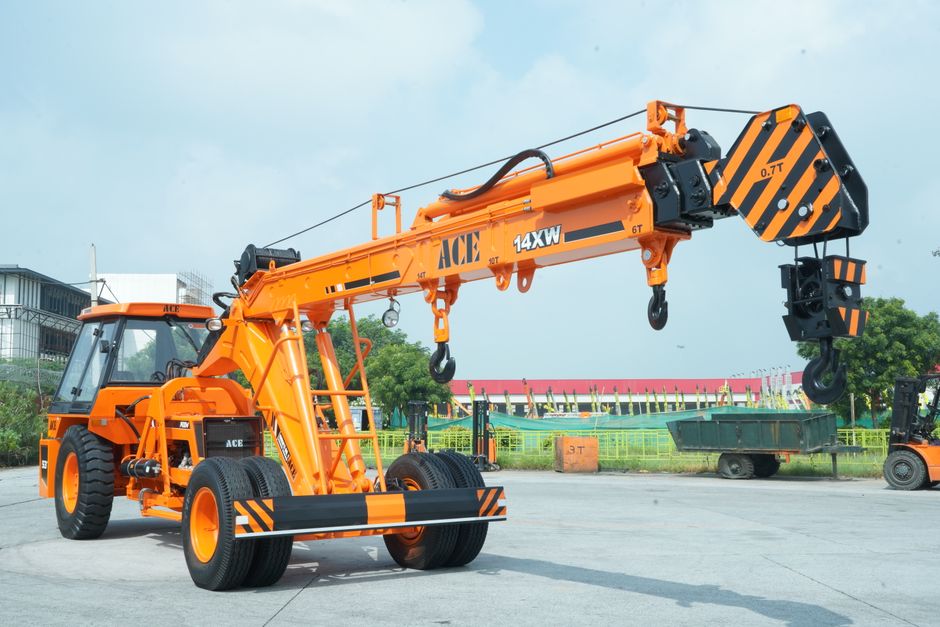
A lift stops being routine the moment the load is too heavy, too awkward, or too valuable for standard equipment and standard methods. At that point the work shifts from operating a crane to engineering a lift. Heavy lift engineering is the discipline that answers the hard questions before anything leaves the ground: how much does the load actually weigh, where is its center of gravity, what path will it travel, what equipment can carry it, and what happens if a number is wrong.
What Heavy Lift Engineering Involves
Heavy lift engineering is the engineering work behind moving loads that ordinary lifting practice cannot handle. It covers designing, analyzing, and overseeing the safe operation of cranes, hoists, and other lifting equipment used in construction, shipping, and industrial projects. The objective is straightforward even when the execution is not: heavy loads have to be lifted efficiently and safely.
That outcome depends on three recurring activities. Engineers calculate load capacities, design lifting plans, and troubleshoot structural and mechanical challenges as they surface. A lift plan is not a formality. It is the document that connects the weight of the load to the capacity of the equipment and the strength of every connection between them.
Scope varies widely from project to project. Heavy lift engineering is often delivered as individual engineering services in isolation to support a client with a more complex lift, rather than as one fixed package. A project may need nothing more than a footprint calculation or a route survey. Another may need everything from a feasibility study through on-site execution. Matching the engineering effort to the actual risk is part of the job.
The Engineer’s Core Responsibilities
An engineer working in heavy lifting sits between the design office and the job site, and the role carries responsibilities that overlap both. The core duties include:
- Calculating load capacities and confirming that the selected equipment can carry the load with margin
- Designing lifting plans that define rigging arrangement, lift points, and sequence
- Analyzing the structural behavior of the load and the equipment under lifting forces
- Troubleshooting mechanical and structural problems that appear during planning or execution
- Coordinating with construction teams, crane operators, and safety specialists
- Confirming that the lift proceeds as engineered once work begins
That last item is where many projects succeed or fail. A plan that is never checked against field conditions is only a document. Heavy lifting engineers stay involved through execution so that a change on site is evaluated against the analysis rather than decided on the spot by whoever is closest to the load.
Planning a Complex Lift
Planning starts well before equipment is mobilized. Because heavy lift work frequently involves over-dimensional, abnormal, and heavy-lift cargoes moving through multimodal logistics chains, the engineering has to account for more than the lift itself. The cargo has to reach the site in a condition that allows it to be lifted.
Several engineering services feed into this stage:
- Feasibility studies that test whether a proposed move is achievable at all
- Transport surveys that document the condition and constraints of the route and the load
- Route surveys that examine the path the cargo and equipment will follow
- Footprint calculations that establish how much ground or deck space the operation requires
- Packing engineering for industrial goods, so that the cargo is protected and stable in transit
Each of these outputs becomes an input to the lifting plan. A route that cannot accommodate the transport equipment changes the equipment selection. A footprint that is smaller than expected changes the rigging layout. Treating planning as a single step rather than a sequence is one of the most common sources of rework on complex projects.
Simulation and Modeling Before the Lift
Modern heavy lift engineering relies heavily on modeling. State-of-the-art 2D and 3D engineering models allow complex and heavy lifts to be simulated in a virtual environment before the actual lift takes place. This gives engineers and operations teams a shared picture of how the load, rigging, and equipment will behave through the full sequence.
Simulation is valuable because it exposes conflicts early. Clearances tighten, rigging angles change, and the load rotates in ways that are hard to visualize from drawings alone. Running the sequence in a model makes those problems visible while they are still cheap to fix, and it gives the people on site a clearer understanding of the planned path of travel.
Choosing the Right Lifting Equipment and Systems
Equipment selection follows from the analysis. Cranes and hoists are the familiar options, but complex projects frequently require specialized systems built or configured for the load in question. Custom heavy lift systems can be engineered for the specific demands of a project, which is often safer than forcing a general-purpose solution into an application it was never designed for.
Depending on the lift, equipment may include chain jack systems for controlled heavy lifting, winch systems for pulling and positioning, conductor removal systems for offshore work, and broader material handling solutions. Rental arrangements are common because many projects need this equipment for a defined window rather than on a permanent basis. What matters is that the equipment matches the calculated loads, not that it is owned or rented.
Certified Weighing, Center of Gravity, and Proof Load Testing
A lift plan is only as good as the numbers behind it. Assumed weights and estimated centers of gravity introduce uncertainty into every subsequent calculation. Certified weighing and center of gravity measurement replace those assumptions with measured values, which allows the lift plan to be built on actual data rather than nameplate figures that may not reflect as-built condition.
Proof load testing serves a related purpose on the equipment side. Verifying that lifting hardware and systems perform as rated before they are placed under a live load reduces the chance that a failure occurs at the worst possible moment. Together, measurement and testing shrink the gap between what the plan assumes and what the lift actually involves.
On-Site Execution and Coordination
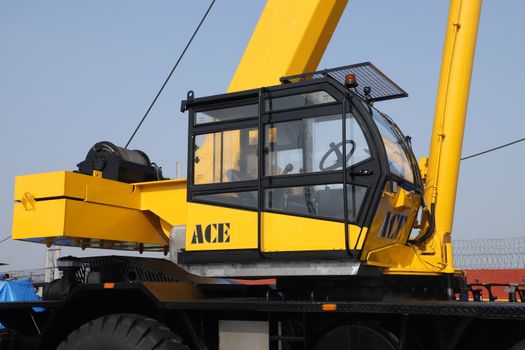
Execution is a coordination problem as much as an engineering one. Heavy lifting engineers work closely with construction teams, crane operators, and safety specialists throughout the operation. Each group holds information the others need: the operators know how the equipment behaves, the construction team knows the site conditions, and the safety specialists know the constraints that govern the work.
Communication matters most when something changes. A load that arrives heavier than documented, a rigging component that will not seat as modeled, or a site condition that differs from the survey all require a decision. Having an engineer available to evaluate the change against the original analysis keeps the response grounded in calculation rather than improvisation.
Project Management and Turnkey Delivery
Many complex projects benefit from project management services specialized in heavy lift and transport work. Engineering firms that offer both project management and engineering can carry a scope from planning through completion, which reduces the handoffs where information tends to get lost. Turnkey lifting and pulling arrangements extend this further by placing responsibility for equipment, engineering, and execution with a single provider.
One provider coordinating the full scope is not automatically better than a multi-vendor approach, but it does simplify accountability. When the lift plan, the equipment, and the field crew all come from the same place, there is no ambiguity about who owns a problem when one appears.

Industries That Rely on Heavy Lift Engineering
Heavy lifting engineering is essential to the construction and maintenance of much modern infrastructure, including bridges, roads, and other large structures. Beyond infrastructure, the work shows up across a wide range of industrial sectors.
- Shipbuilding and marine construction
- Heavy fabrication
- Power generation
- Mining
- Offshore and oil and gas operations
- Aerospace and manufacturing
- Logistics and transport of over-dimensional cargo
The common thread is a load that cannot be handled casually and a project where the cost of a failed lift is measured in more than money.
Safety Is the Constant
Every element of heavy lift engineering points back to safety. Load calculations, route surveys, models, certified weighing, and proof load testing are all ways of reducing uncertainty before people and equipment are committed. The profession exists because heavy loads are unforgiving, and the planning process is how that risk gets managed rather than absorbed.
Frequently Asked Questions
What does a heavy lift engineer actually do?
A heavy lift engineer designs, analyzes, and oversees the safe operation of cranes, hoists, and other lifting equipment used in construction, shipping, and industrial projects. Day to day, that means calculating load capacities, designing lifting plans, and troubleshooting structural and mechanical challenges. The role also involves close coordination with construction teams, crane operators, and safety specialists before and during the lift.
Why are 3D models used before a heavy lift?
Three-dimensional models let engineers simulate complex and heavy lifts in a virtual environment before the real thing happens. Clearances, rigging angles, and load movement are much easier to evaluate in a model than in a drawing. Problems found during simulation can be corrected while the lift is still on paper, which is far less disruptive than discovering them on site.
What is a route survey in heavy lift planning?
A route survey examines the path that cargo, transport equipment, and lifting equipment will follow to and around the project site. Because heavy lift work often involves over-dimensional, abnormal loads moving through multimodal logistics chains, the route has to be understood before equipment is selected. Survey findings feed directly into feasibility studies and lifting plans.
Why does certified weighing matter for a lift plan?
Lifting calculations depend on knowing the actual weight of the load and where its center of gravity sits. Certified weighing and center of gravity measurement replace estimated or nameplate figures with measured values. That reduces the uncertainty built into every downstream calculation, including equipment selection, rigging design, and the load path itself.
Which industries use heavy lift engineering services?
Heavy lift engineering supports shipbuilding, heavy fabrication, power generation, and mining, along with offshore and oil and gas operations, aerospace, manufacturing, and infrastructure projects such as bridges and roads. The unifying factor is a load or a move that exceeds routine lifting practice. Projects in these sectors typically need engineering input on capacity, route, and execution before work begins.